Trigger Warning

** Trigger Warning: This post may contain material that is triggering for sensitive people. Please keep that in mind when reading. I won't take it personally if it's too hard to read, because it might be for you, the reader. I am grateful for those who wander through anyway. Thank you for letting me share my experiences with you. **

Saturday, February 8, 2014

18 - The M______ - Or a Basis for Comparison

 ©Miriam A. Mason

My father was always asking me to "compare and contrast." It was his song, along with how to argue. So here, I will do as he asks and compare our family to that of a neighbor family, the M______. 

The M______ were the family that lived in the huge mansion house on the corner. There were 5 kids from my brother's age to my age. 4 girls and the youngest was the boy who my dad tried to teach Latin to, my age. They left their back door open at all times so that all the neighborhood kids could just come over and hang out, play, build, create, imagine, play board games, it was all there and at the ready. 

Source: http://www.facebook.com

It was that wonderful house that made me love life. There were years they did a carnival for all the neighborhood kids. Their father built us all a clubhouse, and built the kids a full sized puppet theater with footlights and overheads, and so many other wonderful toys. Their basement was a maze of fabulous junk to climb through and discover. Whenever I was at the M______'s house, I always wanted 20 children of my own, to have the laughter, creativity, music, science fiction, Halloween haunted houses, carnivals, puppet theater, homemade bands, adventures, and activity going on at my house all the time, every moment to be filled with that sort of fun. 
 
When I got home, that feeling changed. Our house wasn't full of laughter, you had to be quiet because dad had to work. It was solemn and adult. Jokes could not be played affectionately on parents (although I managed to pull one over on my mom once). It just wasn't done. You could read, play in the backyard in their garden, or go out and away to the M______'s house. The choice was obvious. I spent as much time at the M______'s as I possibly could. 

Source: https://www.facebook.com/pages/After-Narcissistic-Abuse-There-is-Light-Life-Love/114835348601442

The M_____s were very musical, almost all of them played at least one instrument and played it well. J____, the mother, would be playing Ragtime beautifully, her face raised into the air lit up with a smile across her lips, and the music would sing out through their huge mansion of a house. I'd dance to it, and I'd sit for hours curled up by their piano and listen to them play, especially A____ (about 4 years my senior), who was gentle and brilliant and composed pieces that were so beautiful, I could barely contain my joy at hearing them. A____ taught me the most basic beginnings of music, which is still a huge love in my life. One of my favorite musicians alive today reminds me of A____ M______, and I curl up in the same way and listen in awe of her, too (see Imogen Heap).

Source: http://www.imogenheap.com/

Photo by Miriam Mason

At a recent concert with friend Sarah (left), me in the middle and Imogen Heap is on the right.
 
At my house, big brother was never in, or accessible, although apparently, he played guitar some. And dad occasionally brought out his sax and played, but only jazz and only from a certain very narrow period of time. And he was relegated to play the same few things over and over again. I guess they spoke to his soul, but new things can be nice, also. I'm actually saddened by my father's limitations around music. He really missed a lot of wonderful amazing music out there because he was so narrow with his own choices. I played piano at our house. I had lessons, and eventually convinced my mother to take me to A____'s teacher, an old German woman in the Berkeley Hills, who gave me real classical music to play instead of the simplistic stuff my former teacher had. My mom used to play when she was a girl, but mostly, our piano sat dusted and perfect and quiet, unless I played it. And when I played it, I wanted to play my own music, which my father did put up with, unless he was working, and although every single moment was under his objection and subject to instantaneous criticism. 

I mostly focused on classical, though, because it made my parents happy. 

Picture by Maggie Rebhan
 

(My dad had this bizarre belief that popular music like rock and roll had an agenda that was deliberately marketed at young people to move their emotions. Like this was a bad thing. And that any emotions evoked by music should be evoked either by classical or 1930s jazz, as if these carried absolutely no agenda of their own. It was a very strange way to argue against my choices, and my sibling's choices, while defending his own as "real music." This was more than just a generation gap.  This was literally being stuck in one period without the ability to move forward.  To me, his ideas were just more of those enforced arbitrary limits.  I am grateful that all sorts of music speaks to me, and that as music evolves, I am able to enjoy it.  There is some really great new stuff out there!  Amazing talent, people my dad would write off without a second thought.)


Not so at the M______! Lot's of people participated in music, played.  It felt so rich and authentic and joyful, not forced or coerced or with a set of expectations attached.  Once, K______ created our own Monkey's band.  We made wonderful instruments to join in the festivities, tambourines and drums, and homemade cardboard and rubber band guitars, easy stuff for all the kids who loved to visit the M______'s house and to play along.

Every Christmas, they brought in a tree that was at least 40 feet tall (okay, creative liberty, it could have been shorter than that, but I was very small, and that tree looked *huge*) and made the whole house smell wonderful. And everybody gathered around for days before Christmas at the M______ watching and helping as they baked mammoth batches of cookies and goodies for the neighborhood party they would throw on Christmas Day. It was the best of parties ever. My mom made mulled wine for it every year and I'd sneak in as many glasses as I could, because it was fun and so busy, nobody noticed. 

At the M______'s, serious fights were rare (I recall only one in all the years of knowing them).  They certainly did argue a lot, but it was amicable and they found a lot of solutions to conflict on their own.  I never recall anybody being pushed out of any of their games ever. Play and pretend were enormous, and it was at the M______ that I was allowed to dabble in a love my father never approved of: television, especially science fiction. 

The M______ didn't practice television limits and so I got to see all the great shows that were forbidden at my house, "Lost In Space," "Voyage To The Bottom of The Sea," "Mission Impossible," on the rare occasion "Dark Shadows" (although I would wake up screaming in the middle of the night if I watched that one), and yes, even my all time love, "Star Trek." I fell in love with the entire genre at the M______'s house. At home, I got one hour a week of television and the shows I could pick from were my parents' selections. Eventually, my father let me watch reruns of Star Trek every night, and my parents and sister would sneak down and watch it with me, even though they never copped to enjoying it. In fact, my father, in his usual timber, was full of criticism for it.  Amusing that he later watched the followup series' too.

I saved this postcard from my first convention for years.  I may still have it.

It wasn't shameful to enjoy things at the M______. At Halloween, their mom would buy T____ a huge bunch of great haunted house gadgets and dry ice. The house would be transformed every year into a super spooky mansion and even indoor tours were created. One year I helped T____ stuff a whole dummy of his father's old clothes and it was set outside next to a pot filled with dry ice and running water, and many kids wouldn't even go past the dummy to get upstairs. Let alone stay long enough for the rubber spider to drop on their head when they rang the doorbell. 

The M______ never minded if you played on their huge property. And when I felt completely hopeless and depressed as a child, their big property had secret pathways and hiding places that were my secret places of inner peace, where I could cry real tears I could not cry at home without being punished or ridiculed.  I remember watching my tears falling into the dirt and soaking in at the edge of their house more than once.  I'm not sure they ever knew.

Source: https://www.facebook.com/pages/After-Narcissistic-Abuse-There-is-Light-Life-Love/114835348601442

One incident at the M______ particularly stands out. I was walking in the back door and the mother, J____ was standing there by the pantry. I smelled the M______'s house as soon as I walked in, a favorite smell of all. And suddenly, without any warning, J____ swooped me up in her arms and squeezed me in a huge bear hug and kissed me several times on the cheek, and said "I just LOVE you!!!" And then she put me down and so I could go off to play.  I had never had that happen anywhere before.

My parents never once did that. Love was not spontaneous or demonstrated in this way in our household. Love was, unless they were in a good mood about something in their own lives, to be earned via approval. 

To this day, I make sure I give my kids lots of enormous unexpected hugs and squeezes with kisses and I tell them I love them! How did I get so lucky to have someone like each of them in my life? Because it's true. And if you don't tell someone that, especially a child, they will really never know if it's true. Hugs are good for the body and the mind, and there is now science that backs this up. 

Source: http://www.mentalhelp.net/poc/view_doc.php?type=doc&id=47807

It was like being in full color life at the M______'s, and it was all shades of subtle dimmer damped-down colors at my parent's house. I had many things to keep me busy, I had toys, and books and limited access to a TV, and a back yard. But I was lonely for the one thing I didn't have, genuine unconditional love and acceptance for just being myself. 


To this day, I remain deeply grateful the M______ were in my life.  When I think of my childhood, it is they who I miss the most.


Source: http://www.huffingtonpost.com/greg-archer/gifts-the-gratitude-exper_b_582207.html


* * *

Friday, February 7, 2014

17 - Mindfully Myself and Parenting Choices

©Miriam A. Mason

I can say here that I am without words to describe the gratitude I feel towards my choices around parenting. I would never dream of asking my children to stop their joy, especially not to make them feel worse! The only reason would be other joy. 


Corrected Memes

My father would balk at the fact that the kids get the big TV in the front room (or that there is a TV at all in the front room, actually). It is astonishing how far I have moved from his variety of parenting. My children's joy is contagious, infectious and perfect. It's about me sacrificing without any issue for my children, it's about my *relationship* with my children which takes priority over any other factor. No, my kids don't run rampant over me, or own the place, in fact, they are incredibly polite, helpful, and thoughtful and loving. They have never been told "stop crying, or I'll really give you something to cry about." They have never been laughed at, or taunted, or teased, or tormented or ridiculed. That are not hit, or sent to their rooms (my younger son doesn't even have his own room, he chooses to remain with us because clearly he needs to still). 

They have never been sexually assaulted. 

They have never been beat up. 

They know they are safe.

And, they are extraordinarily good at being my best teachers in the entire universe.


My movement this far from my parents as even a remote possibility is something that never would have crossed their minds. They would interpret my parenting as "permissive" or "too easy" or "not enough hard work." No public schooling. But science bears out my position on this more and more each day. Working a child harder does not make a better person. And it turns off the person the child is supposed to be. And leaves the child second-guessing themselves their whole lives. Whether at school or at home. 


How I was schooled left me only a few happy years, and most of the subjects, I've completely forgotten because the abuse and fear was so intense.

I found school soul-crushing, much as John Taylor Gatto describes in his book (available online for free) "The Underground History of American Education." And the soul crushing at home served to reinforce that fear and self-doubt and paralysis. 


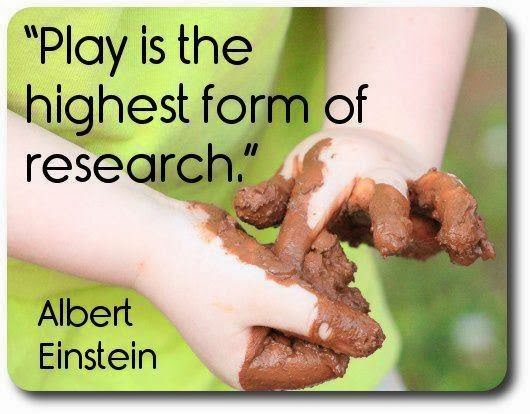
I have learned that for my children as well, play is far more productive in their ability to learn and function and flourish. School would have crushed their souls, too, and was beginning to until I took them out.


I know that I have already successfully moved away from my parents' paradigm of criticism and judgment into one of unconditional love and mutual respect. And it is deeply satisfying. I am not perfect, but I am mindful, and aware, and I make mistakes which I deeply regret and I tell my children so, and apologize for having screwed up. I am the parent I needed so badly. And that is amazing.

Source: https://www.facebook.com/pages/Survivors-of-Child-Abuse/279131948791470

Because I come from a narcissistic family and began my parenting journey on that note initially, I must remind myself all the time to remain mindful. To pay attention and when I really can't handle a thing to gently tell my children I need space for mom to chill out for a bit. I think of this often, check my behavior, center myself, ask why I am saying or doing a certain thing, and weigh it against what I experienced, in order to consciously change the way my brain works in relation to my children. In a very real coherent way, they have been hugely responsible for my healing. The fact that they have autism makes them even more sensitive than I am. People say children with autism don't feel empathy. I beg to differ, and in a very big way. They feel *too much* empathy and must shut it down or it becomes physically painful. The relation of their bodies to their minds is even more connected and important to pay close attention to, for the world can be an overwhelming place.


Source: https://www.facebook.com/GentleParentingUK

It is on ME, not them, to find out what their needs are in a given situation, so that we can balance all our needs and I can remain in a respectful place. I do screw up and yell sometimes, but it's the exception, and I always let my kids know I screwed up. They know I am human and make mistakes. They also know they can make mistakes.

Source: http://www.facebook.com
Being that narcissism runs in families, I will have to always remain mindful of myself, my intention, my needs, and separate them from what my children truly need themselves. This is something my parents could never do. They had all their shame tied up into all their children and we all suffered as a result.

I know I've changed, but I can always get better. I've noticed since writing this a shift in my own feelings when one of my kids comes in with a problem. Instead of wanting to "fix" it, think of solutions and problem solve with them, I wait and listen first. I listen a lot more. And Listen. And no longer open my mouth unless I am asked. How I wish my parents had done the same. 

Source: http://www.facebook.com
I am so grateful for my children, this healing, and the support of the people I love around me. It's made this change into a reality.  I am also grateful to myself for noticing and choosing to make the change and for working at it every day.


Source: http://www.facebook.com

In an odd way, I think my father quite literally verbally (and sometimes physically) smacked the possible narcissist out of me. Since I wasn't the Golden Child except for brief periods, I was more often subject to lecture and criticism. Which is why the Adult Children of Narcissistic Parents article resonated with me so deeply.

The truth is, I would never want to be like him. I would never want to be known for having a great sense of humor, writing a bunch of books, and also hurting my children for the rest of their lives. Because from inside, where I was, that is how it went.

Every single day, now, mindfulness remains a primary focus for me. My relationship to my children trumps all other considerations, and respect flows in both directions.


I do not wish to repeat his mistakes, nor my mother's. My children -- all children -- deserve so much better. 


• • •

Sunday, February 2, 2014

16 - Pushing Forward Falling Backward, And Then There's Shakespeare

©Miriam A. Mason

[Note: this blog really is a stream of consciousness and does not follow any logical argument.  In fact, I'm leaving it, because it would drive my dad nuts.]

I want to get past this hard stuff and into reflecting fondly on some of the more joyous moments of my childhood, even those which included my parents. After having written this, I know that I thought there were good moments, too. Dancing on my father's feet to Duke Ellington (his choice of music -- jazz from the late 1930s only, or classical, that was it), listening to my father's voice characterizations from books (his choice there, too, although he could have me in stitches at times, too), the nights he carried my mom around the kitchen as she tried to clear the table and do dishes and laughed herself (and me) until we were crying, it was so funny. Of course all these were characterized by his likes, by his preferences. Even so, I know there was a part of my father that clearly wanted my approval, as well, but just didn't understand the dynamics of the roles he'd preset for us. We had many funny moments, but they were defined by him.
 
Source: http://www.facebook.com


Nonetheless, these are the memories I would prefer to have and hold. But when I do hold them, I remember them as conditional because they can never be separated out as pure moments of shared joy. Too much control, not enough shared equally between us. Such moments will always be tainted by varying levels of conditionality. And the moments of being unafraid were always in the shadow of the moments of being afraid. Because the moment to be afraid was always coming, ever present. As I have said, through no choice of my own, shame was (and sometimes still is) my closest associate. And that is tragic, for any child. For any human. And creates a lifetime of struggling to overcome. 


I will work on this, talk to professionals, read, read and read some more, write, think a lot, process and process. That's what all this is about. I see a therapist who I adore and who has been encouraging me to take baby steps toward making this blog public and available to everyone. But to start slow as I am. Each time I post one of these entries, I find myself shaking and wobbly. So, tiny steps. 

Source: https://www.facebook.com/lissarankin

At 16, I went on Outward Bound (a whole other story worthy of its own entry). One of the boys there was incredibly sweet and supportive. He told me "inch by inch and it's a cinch, but yard by yard is very hard." Yeah. That.

Source: https://www.facebook.com/deppresion?ref=br_rs

I find as I am writing I am getting my own Self back, devoid of the voices from my past (mostly, I hope). I know they formed me in part and I cannot escape from that as long as I live. There's no such thing as a brain-eraser... yet. But my parents and their entire process no longer rule my actions, my feelings, my opinion of myself. None of them have any power over me any longer, because I get to decide for myself who is and who isn't in my life.

My father's voice in my head has faded over time, and my voice has evolved from from it, and then rebelled against it. Back and forth and back and forth, like a pendulum. Life used to be a constant effort to not shame myself, to not feel shame and guilt and pain over and over again, to not take the "small stuff" and turn it into my personal failures and shortcomings. To not wait for the next moment I will "be in trouble" from whoever happens to be in my life. 


Again, my 21st birthday was like the first day of personal hell for me. Here I was supposed to be an adult with all the commensurate expectations and responsibilities placed upon me, and I felt nowhere near adulthood. I felt completely unprepared either emotionally or logistically to handle the big world by myself. I felt my birth was a time of mourning, that I had no worth or value in the world other than my parents' definition of it. At that age (and for many many years after that) I heard nothing but my father's voice in every interaction, everywhere I went, coloring each and every experience in my mind. My voice was gone. It was lost. It had never been.
 
Source: http://www.facebook.com

The child inside me was screaming for justice, to tell the truth. It seemed to be brought on by a change I made. It began to affect all other aspects of my life and my ability to function, as though inside, my small girl was throwing (as my son calls it) a "rage fit." It started when I recently began meditating, using a simple mantra. The mantra reminds me that I love myself exactly as I am and that I am worthy of everything I want. I've been doing 2 minutes every single day.

Source: https://www.facebook.com/MeditationMasters


The more I did this meditation, the closer I seemed to come to a break, as if the never-healed child inside me heard that mantra and woke up and started crying hysterically. At first, I really didn't understand what was happening, or why I as suddenly having so much trouble just functioning among my friends, online, in real life. I was afraid to go anywhere or be with those I trusted most (outside my family). My family is like my little sanctuary and for some blessed reason, I can function with them even in the worst circumstances. As realization began to kick in, I decided to get help. Unlike my parents, who would panic under such circumstances, I choose to hold the little Miriam and comfort her without judgment, with unconditional love and acceptance. Knowing that just being she (and I) is enough. And that is where this writing comes from.
 

Source: https://www.facebook.com/pages/After-Narcissistic-Abuse-There-is-Light-Life-Love/114835348601442

The goal is being able to look back without feeling caught. It doesn't always feel attainable. It's incredibly easy to fall back into detesting myself, thinking, wow, Miriam is a weird name, an adult's name, how could she deserve to be held like a child? It can be hard to keep holding her!
 

It's a weird place to be in. Caught between two such opposing worlds. 


Source: http://www.facebook.com Artist: unknown

Eventually, maybe I can also share even more of the moments of joy, but I can't forget that they were always tendered by what defined my father's or my mother's joy. For if I do, I lose track of what I am and the boundaries again blur between myself and my parents. 

Source: http://www.facebook.com

There was one instance in which my mother totally gave of herself to me. It was when my dad was out of town, because I honestly don't think he'd have permitted it. One summer morning, I woke up and my mom had made pancakes. While at breakfast, she asked me if I'd like to find a friend and she would drive us down to the beach and boardwalk to play in Santa Cruz. I was literally stunned into silence at first. And then she asked again, and I was so elated and thrilled. This was the exception, though, not the rule, and it was because dad didn't know about it. Perhaps she was just as scared as I was in that regard. That day and that day alone, was the first and last time she ever rode on a ride at a park with me, and shared it with me openly. She laughed like a young girl and ate ice cream and cotton candy with us. It was an amazing day and it stands out. 

Source: http://www.facebook.com

There should have been and could have been so many more. But it's just one memory. It should be thousands of memories of shared joy. But most of the time my mother was tripping over herself to please my father, the king of his own personal ivory tower, with us as his subjects.
 

To my father, sharing joy was reading (among other heavies) Charles Dickens, Mark Twain, Jane Austin, Homer, Chaucer, Pope, Milton, Aristotle, Sophocles, Euripides, and mostly, Shakespeare. 
 
Source: https://www.facebook.com/WilliamShakespeareAuthor

I was really able to enjoy Shakespeare with him, once I understood the language. I have an uncanny knack for speaking Shakespearean pros and the poetry. To my father, it was complex language with brilliant hidden meanings. To me, Shakespeare was like music. I knew how to sing his music. Which is part of what motivated my short theatrical career. But Shakespeare was an interesting dichotomy for me. And it's impressive now, how like my father his favorite Shakespearean tragedy was.  

Source:  Royal Shakespeare Company
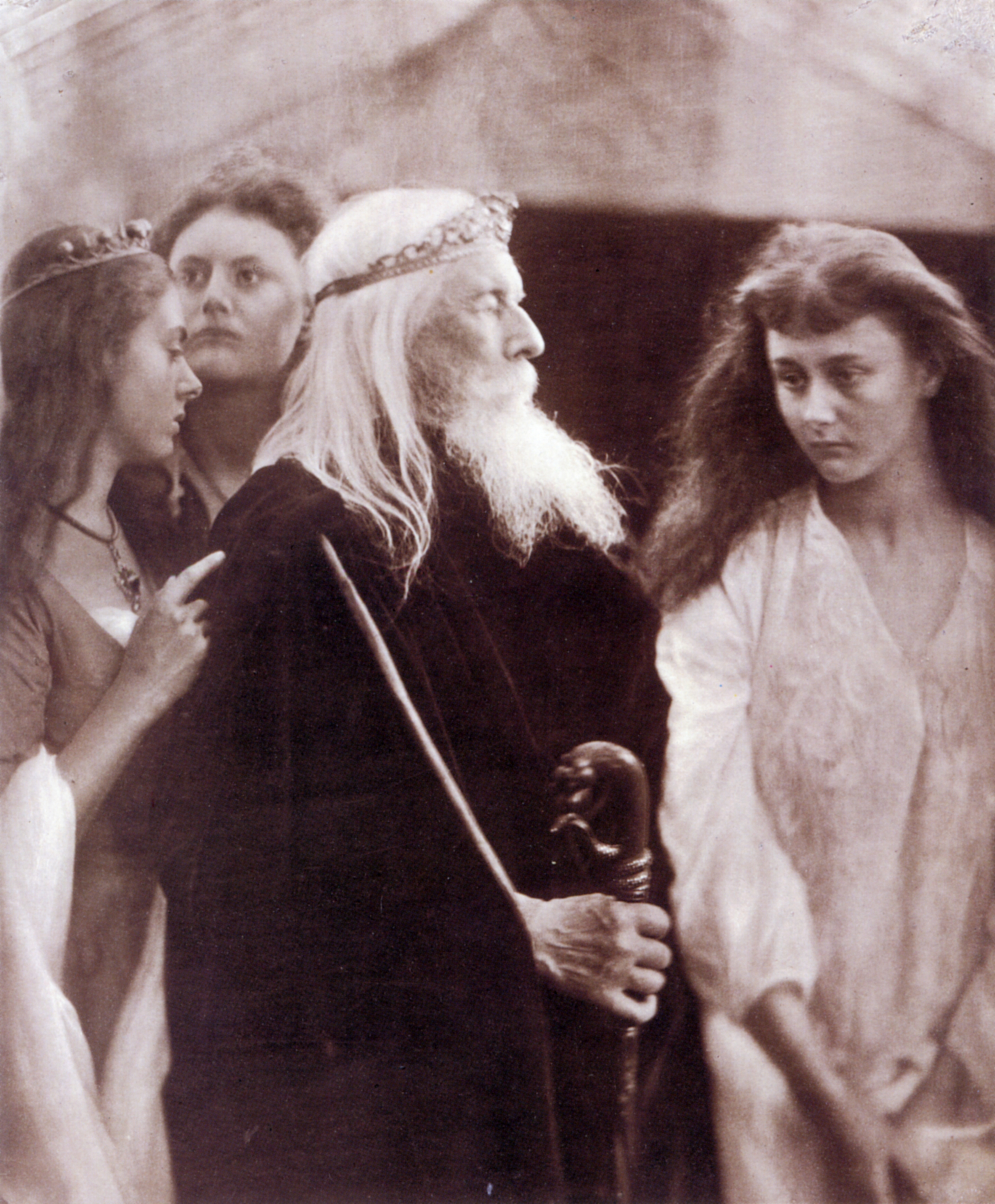
Lear in all his majesty with his three daughters


My father's favorite Shakespearean quote to repeat over and over to me was from King Lear: "Oh, how sharper than a serpent's tooth it is to have a thankless child." And like King Lear, another narcissist, it mattered not the unconditional love Cordelia carried for her father, even if in only one part of her heart, as she tells him, what mattered is the ego and image of the father. My father's tragedy was in telling me I needed to lie to him to make him happy and approve of me. The irony here is a little hard to articulate.  

Source: http://i.telegraph.co.uk/

The other line he used on me quite often from that play was "her voice was ever soft, gentle and low, an excellent thing in woman." Lear says this while Cordelia lies dead in his arms.  How insecure that one made me! I worked hard to make sure my voice was as low as I could get it, for apparently, according to the only person in the world who mattered, it was an excellent in a woman. These were some of the standards by which my father seemed to judge so much. 

Source: http://www.mckellen.com/


For those unfamiliar with King Lear, there is so much sorrow and pain within it.  It is probably the saddest of the tragedies.  The play is set up when an aging King Lear decides he will divide his kingdom up into three equal parts, one for each of his three daughters. The two older daughters, Goneril and Regan, lie to their father, and tell him exactly what he wants to hear, that they love him beyond anything else. When it's the youngest daughter, Cordelia's, turn, she tells him that she loves him as a daughter loves a father and no more. And that surely if she loved him with all of her heart, she would have no room for loving a husband in the future. Lear falls into a rage and divides the kingdom up between his two older daughters and banishes Cordelia. This proves disastrous, as the two older sisters mount a war against Lear himself, and both Cordelia and Lear (and his two other daughters, in fact just about everybody) are finally killed. Nice model, there, to hold up for your kid. 

Source: http://www.usatoday.com
"her voice was ever soft, gentle, and low, an excellent thing in woman."

What makes the irony of this even clearer is that my father referred to the error as being that of Cordelia's for speaking the truth, not of Lear's, or his older daughters. In other words, the daughter should always placate the ego of the father. When I (and many others) look at that scene, we do not see the mistake of a daughter. We see the rampant and grossly overblown ego of an old man, who manages to destroy his entire family over said ego. This rings a lot of bells, and points at the truth of my father's enormously overblown sense of self-importance.

Lear, dad, really? This is the model you most admire? A tragedy in which everyone ends up dying because of an old man's ego?
 

Source: http://www.mckellen.com/

Another of his favorite quotes was also from Lear, and apropos here, here as well:

"O reason not the need! Our basest beggars
Are in the poorest thing superfluous.
Allow not nature more than nature needs,
Man's life is as cheap as beast's." 
~ William Shakespeare, King Lear

Meaning, in other words, life is cheap, there are important people, and all the other people are unimportant and disposable (aka, worthless, beasts, base). That sounds about right. Turns out, though, dear father, that I am an extra person as you would choose to define a life. You have no right to attempt to define my life, or the lives of others, and you never did. You are in no position to judge any of those people you summarily dismiss. None of those lives belonged to you and they never have. Not even mine. 

Source: http://www.facebook.com

For he lacked entirely the ability to feel or experience empathy towards anyone else. Even with animals in our family. He treated them with amazing disrespect, and absolutely lacked any understanding of how to relate to them.  Our animals hated my father and, for the most part, he hated them.  They were ownerships.  I don't think it ever occurred to my father to look into the eyes of another animal and see them as a living breathing being.  They were sometimes funny and mostly inconvenient property which could be used as amusing toys at times.


Oh look, more stories.  One more shorty:

My father's response to "I have a headache" was "Here, I'll punch you in the stomach so you feel better." I would ask, annoyed, "How will that make me feel better?" My father would respond as though he was finding himself very very funny indeed, "You'll forget about your headache because your stomach will hurt." Perhaps it might have been funny, but also it was dismissive, minimizing and violent. And repetitive. That was his automated response if I mentioned pain anywhere. The man didn't have an microgram of empathy in his pinky finger nail. 

Just like his beloved King Lear.  He asks you to feel profound empathy on his behalf.  But has none for you in return.
 
Source: http://upload.wikimedia.org/wikipedia/commons/f/f8/King_Lear_allotting_his_Kingdom_to_his_three_daughters,_by_Julia_Margaret_Cameron.jpg


* * *

Saturday, February 1, 2014

15 - All Grown Up, or So They Told Me

©Miriam A. Mason

By the time I was 21, I knew I didn't feel at all like an adult. I wept and felt depressed for my birthday, and every birthday thereafter. There was no reason to celebrate my life, my birth. Nobody else had, why should I? I was a complete failure, saw things and felt things that didn't align with my father's position and was therefore doomed to live in mediocrity according to him.


That 21st birthday was not a joyous time. It should have been a huge celebration, and big excitement for what was to come. But it wasn't. It was horrible. Never having received the nurturing unconditional love and support that provides a child with enough self-love to be successful and happy, no matter what they choose to be, I felt groundless, and frightened to try my hand at anything in which I could potentially fail. It literally paralyzed me by the time I was supposed to be a young adult.
 

My parents approved of theater to a point, and would have gladly worn the golden feather of my making it in their caps, if I had, but also told me on numerous occasions that I had chosen a flimsy emotionally motivated career, that wasn't serious or really real, especially if I had flopped. I couldn't win in either case.
 

While I enjoyed being on stage, and my parents approved of it as long as I was doing the right kind of plays, I also struggled to connect with the people who had chosen theater themselves. In my father's own voice inside my head, they seemed overly self centered, vindictive, gossipy and in my heart, they felt incredibly unkind. I felt that in my soul, I was (and am) essentially a kind person. I didn't want to be with other theater people, I really didn't want to do it, didn't want it badly enough, because I hadn't really wanted it to begin with.  It was an attempt at making a career of which my father would be proud. Because if I tried it, really gone the course, I'd lose either way, my parents taking credit for me if I succeeded and criticizing me unendingly if I failed. I was going to lose in either scenario, and, in fact, felt I already had. 


Source: https://www.facebook.com/lissarankin

With ballet, I was quite good by 14, but the same, absolutely no emotional support from parents to allow me to remain grounded and healthy while I tried it. And my experience with ballet also ended on a terrible emotional note during which I received no support at all from my mother. The silliness of a teenage crush and another adult who didn't understand set me off on a common teenage experience of emotional trauma and unrequited love.  But it became a massive mountain to my mother that was enough for her to pull me from ballet forever and discourage me from ever going back. 

She told me later that my ballet master had called and told her that he'd had such great dreams for me. I was already busy trying to live my parents' dreams of me. I seemed to be living everybody's dreams but my own.  I didn't even recognize my own anymore.  I knew I wanted to live alone on an abandoned tropical island with animal friends, hunting fish, running through the forest, climbing trees, surviving the wildenerness... and being away from most everybody people-ish.


 Leaving ballet was just as well. My parents wanted me to be graceful like a ballerina and I was growing quite large breasts by that time. George Ballenchine's mentally unwell notion of a stick woman equals beauty was (and still is) all powerful and anorexia was just beginning, although I didn't partake. Even though I'd been removed from ballet, I still dreamed of dancing.  But I realized that my dream of being a ballerina would die as my breasts grew far beyond the acceptable limit.  It was a private death, for my mother minimized it; whereas dance culture did not. I still miss dance. Only the dance part. Nothing else. And I'm not even sure if my loving it was because my parents wanted me to love it, or because I really did. So tangled a web they wove. 

Sad Clown, my first solo before moving to a professional studio.

Writing? Well, how could I possibly follow the act that was my father? The poet, rhetoric professor of a department at UC Berkeley that he helped to found. Published many books of poetry, translation and other writing. Emeritus, Guggenheim winner, etc. etc. etc. Isn't he the ultimate? In order to write, I had to write as he did, or very similarly, and to have followed his path into academia which I did not really want at all, even though I convinced myself I did, because deep down I wanted to be the Golden Child. But it was all so fake. I could not bring myself to do it. How could I write inauthentically in order to please my father? There was nothing to say. I felt empty.  Nothing came out.


Source: http://www.facebook.com

I ended up having all sorts of varying careers, from word processor, to desktop store manager, to executive assistant, to technical writer, to graphic artist, to online forum coordinator/manager. In the last area is where I had the most fun and where I met my beloved and truly supportive husband. I actually don't have a particular "thing" I do. It's nebulous and varied. And I'm pretty good when I put my mind to a thing. But I didn't get a PhD, which is what he had wanted. And I never will, because I do not want to do it and even less now that I understand the psychological dynamic that was playing out in our family.  I don't want to give him the satisfaction.  I want to write without having had to follow him, if I write.
 

It would have to be mine, not his. And until I figured out how I was given a false voice, as demonstrated in these writings, I really couldn't find the reason, inspiration or passion to write at all.  Because I was supposed to write under his terms, conditions, definitions and rules.  Set up for failure.

Writing this blog seems to have unplugged something in me and I find I am writing overall a lot more.  Empty gone, overfull now.  I guess I've been sitting on my tongue for a long long time.


Source: https://www.facebook.com/pages/After-Narcissistic-Abuse-There-is-Light-Life-Love/114835348601442


If there is one other thing I am proud of being, it's being a better parent to my children than my parents were ever to me, by a wide margin.  Not at first, certainly.  At first I went along assuming what my parents had done was right and I hurt my children.  Especially my older son.  I haven't words to explain the level of gratitude I have that I didn't continue on that path.   I am not perfect, but I am mindfully and consciously working every day to become more aware, better, more conscious, more connected with my children.

Source: https://www.facebook.com/GentleParentingUK

Being a mother has been by far the most satisfying and life-changing of all my experiences. I consider that the most important job in the world, especially given my children have special needs and perceptions. They would have been destroyed in a family such as the one I was raised in. And my children have taught me more than my parents ever did about unconditional love. With such brilliant teachers, I haven't far to go to be reminded of the importance of conscious respectful parenting.

Saying it again.  Because it feels right to say it.  It has taken me until 51 to finally realize that I am a survivor of a psychological form of abuse. That I witnessed the abuse of both myself and my sister. We were girls, and were not taken nearly as seriously for our own loves than my brother had been. My brother was the Golden Child. My father spoke proudly of him even when he was a big time drug dealer making hundreds of thousands of dollars and living a wealthy life of addiction and money and dealing. My sister and I were always less than him, even then. And so big brother has, by default, become the next narcissist-in-chief. As far as I am concerned, he is welcome to that particular crown. 


Source: https://www.facebook.com/BattlingChronicPainandMentalHealthTogether

I truly wish him well in that regard. All the while knowing that in my speaking my truth, and telling my stories, he doesn't wish me well at all. 


Source: https://www.facebook.com/DomesticViolenceKills

* * *